If you walked by my house at 7:00 AM, you might think I’d lost my mind. Even in the dead of winter, you’ll find my front and back doors wide open and the windows unlatched. No, I’m not trying to heat the neighborhood—I’m “burping” my home.
I first learned about this through the German practice of Stoßlüften. The idea is simple: instead of letting stale, toxin-laden air sit in your home, you give it a “shock” of fresh air.
As I’ve journeyed deeper into non-toxic living—especially after seeing the hidden hazards in my parents’ kitchen—I’ve realized that the air we breathe is just as important as the pans we cook with. Modern homes are built so tight that they trap everything: cleaning chemical fumes, dust, pet dander, and those pesky VOCs from new furniture.
How to Burp Your Home in 3 Steps:
Open Wide: Open windows and doors on opposite sides of the house to create a “wind tunnel.”
The 5-Minute Sprint: You only need 5 to 10 minutes. This replaces the air volume without losing the thermal heat stored in your walls.
Seal it Up: Close everything and enjoy the immediate crispness.
It’s a free, 5-minute ritual that leaves me feeling empowered and my “Well Haven” feeling truly fresh.
🕒 Timing Your “Burp”: When is the Air Cleanest?
To truly master the house burp, you have to be a bit of an “air detective.” The best time to open your windows depends entirely on what’s happening in the world outside. Here is the golden rule: Open up when the outdoor air is at its peak quality.
1. The Afternoon Advantage (Best for Most)
In many suburban and urban areas, air quality is actually best in the mid-afternoon (between 3:00 PM and 5:00 PM). Why? The sun warms the ground, causing air to rise and mix with the upper atmosphere. This “vertical mixing” acts like a giant fan, dispersing ground-level pollutants and keeping the air near your windows crisp and clean.
2. Avoid the “Rush Hour Trap”
It might be tempting to burp the house as soon as you wake up or right before dinner, but these are often the worst times.
Morning (7:00 AM – 10:00 AM): Commuter traffic creates a spike in nitrogen dioxide and particulate matter.
Late Night (9:00 PM – 11:00 PM): As the ground cools, a “temperature inversion” can happen, trapping pollutants close to the earth where they can easily drift into your home.
3. The Seasonal Shift
Summer: Watch out for Ozone. Ozone levels typically peak on hot, sunny afternoons. If it’s a heatwave, aim for an early morning burp before the sun starts cooking the city air.
Winter: Beware of Wood Smoke. In colder months, evening air can be heavy with soot from neighbors’ fireplaces. A mid-day burp is usually your safest bet.
4. Use Your “Digital Nose”
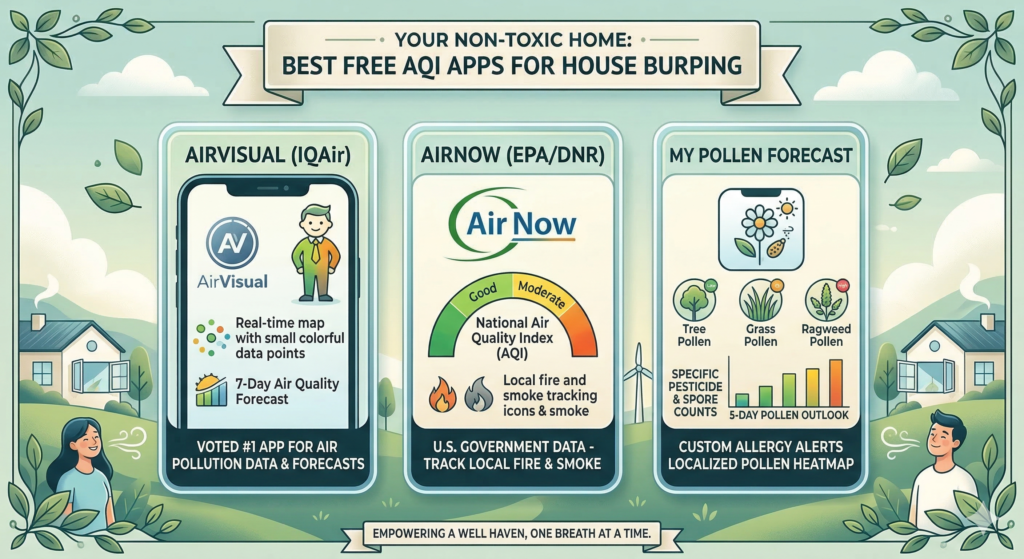
Don’t guess—know! I always check a real-time AQI (Air Quality Index) app before I crack a window.
AQI 0–50 (Green): Perfect! Open every window in the house.
AQI 51–100 (Yellow): Okay for a quick 5-minute “flash” vent.
AQI 101+ (Orange/Red): Keep the seal tight today. Rely on your indoor air purifiers instead!
Here are a few app recommendations to get you started: