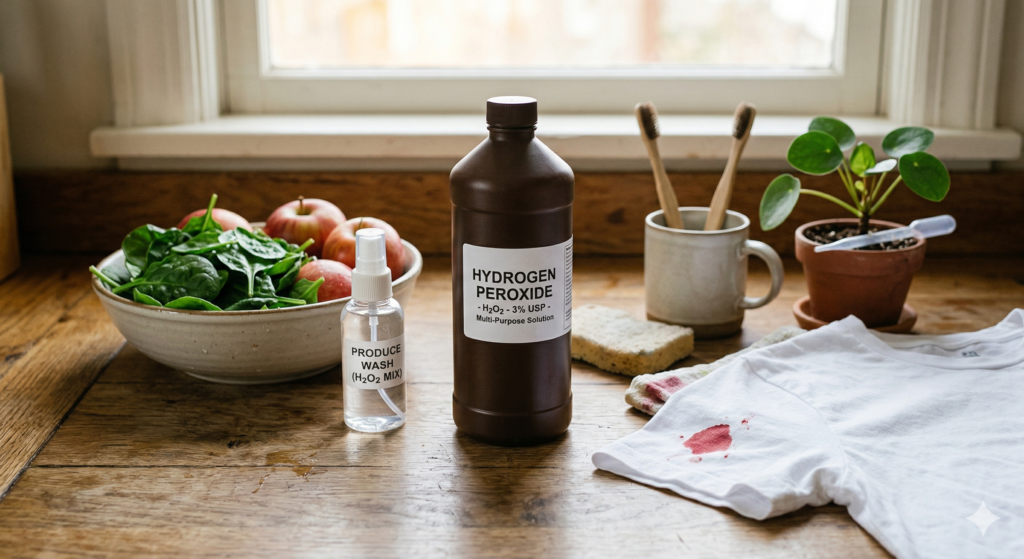
The Iconic brown bottle tucked away in the back of the medicine cabinet is a powerhouse
For decades, it was the go-to for scraped knees, but in a modern, non-toxic home, its potential goes far beyond first aid.
If you are looking to reduce the “chemical load” in your house, hydrogen peroxide H2O2 might just be your new best friend. It is inexpensive, readily available, and—most importantly—completely biodegradable.
How It Works (The Science Bit)
Hydrogen peroxide is essentially water with an extra oxygen atom. When it comes into contact with bacteria or organic stains, it releases that extra atom in a process called oxidation. This reaction effectively “zaps” pathogens and breaks down stains without the need for the harsh fumes associated with chlorine bleach.
In the Kitchen: A Safer Sanity
The kitchen is often the place where we use the most aggressive cleaners, but it’s also where we prepare our food.
- The Produce Refresh: Fill your sink with cold water and add about 1/4 cup of 3% hydrogen peroxide. Soak your leafy greens or hard-skinned veggies for 5 minutes to help neutralize pesticides and kill lingering bacteria. Rinse with plain water afterward.
- Cutting Board Deep Clean: After working with meat or fish, spray your wooden or plastic cutting board with peroxide. You’ll see it fizz—that’s the oxygen working to sanitize those deep knife grooves where bacteria hide.
- The Sponge Reviver: Don’t toss that “funky” sponge. A 10-minute soak in a 50/50 mix of peroxide and water will disinfect it and extend its life by weeks.
- Drain Disinfectant and how to Kill the Biofilm: Drains often smell because of “biofilm”—a slimy layer of bacteria and mold that clings to the pipes. Pouring a cup of 3% hydrogen peroxide down the drain and letting it sit for an hour will oxidize that slime and kill the odor-causing bacteria.
In the Laundry: The Gentle Brightener
Chlorine bleach can be hard on fabrics and even harder on your respiratory system.
- Whiter Whites & Organic Stain Remover: Add one cup of hydrogen peroxide to your wash cycle instead of bleach. It’s effective at removing “yellowing” from sweat and keeps your linens looking crisp.For organic stains like blood, grass, or red wine, dab a little peroxide directly on the spot before washing. (Note: Always do a spot test on colored fabrics first, as it can have a mild bleaching effect!)
In the Bathroom: Mold and Mildew’s Enemy
Bathrooms are prone to moisture and mold, but you don’t need to hold your breath while cleaning them.
- Grout Whitening: Mix baking soda and hydrogen peroxide into a thick paste. Apply it to your tile grout, let it sit for 20 minutes, and scrub. It lifts the dark mold without the toxic odor of traditional bathroom sprays.
- Toothbrush Hygiene: Keep a small glass of peroxide on your counter to soak your toothbrush for a few minutes once a week. It’s a simple way to ensure you aren’t re-introducing bacteria every time you brush.
In the Garden: Breathing Life into Soil
Even your houseplants can benefit from this non-toxic helper.
- Root Rot Rescue: If you’ve accidentally overwatered a plant, the roots can begin to “suffocate.” Watering with a diluted solution (1 tablespoon per cup of water) releases oxygen into the soil, helping the roots recover and warding off fungal infections.
A Quick Safety Reminder
While hydrogen peroxide is a “green” cleaner, it still deserves respect:
- Keep it in the dark: Peroxide breaks down into plain water when exposed to light, which is why it comes in an opaque brown bottle. Keep it in its original container!
- Stick to 3%: The standard “drugstore” concentration is 3%. Avoid “Food Grade” (35%) peroxide unless you are an expert, as it is highly caustic and requires extreme dilution.
The Bottom Line
Transitioning to a non-toxic lifestyle doesn’t have to be expensive or complicated. Often, the best solutions are the simplest ones. Next time you reach for a heavy-duty cleaner, try the little brown bottle instead. Your home (and your lungs) will thank you.